PRP Therapy in Busan, Korea
Natural Regenerative Skin Treatment at Seomyeon One Clinic
PRP Therapy in Busan at Seomyeon One Clinic uses Platelet-Rich Plasma (PRP) prepared from your own blood to stimulate natural tissue repair, collagen production, and skin regeneration. Rich in growth factors, PRP helps improve skin texture, elasticity, fine lines, acne scars, and overall skin quality. It is also commonly combined with microneedling, lasers, and other regenerative treatments to enhance healing and rejuvenation.
What Is PRP Therapy?
Platelet-Rich Plasma (PRP) Therapy is a regenerative treatment that utilizes the healing properties of your own blood. A small blood sample is collected and processed using a centrifuge to separate and concentrate platelets that are rich in natural growth factors. These growth factors are then injected into the skin or combined with other procedures to promote collagen production, tissue repair, and skin rejuvenation.
Because PRP is prepared from your own blood, it is biocompatible and does not contain synthetic materials or foreign substances.
At Seomyeon One Clinic, PRP Therapy is customized according to your skin condition, age, treatment goals, and overall skin quality.
How Does PRP Therapy Work?
Platelets contain numerous growth factors that help stimulate fibroblasts, encourage collagen synthesis, improve blood circulation, and accelerate tissue repair. Once PRP is injected into the skin, these growth factors promote natural skin regeneration, resulting in healthier, firmer, and smoother skin over time.
PRP can also enhance recovery following laser treatments or microneedling by supporting the skin's natural healing response.
Benefits of PRP Therapy
PRP Therapy is popular because it uses your body's own regenerative abilities.
Benefits include:
- Stimulates natural collagen production
- Improves skin firmness
- Enhances skin elasticity
- Softens fine lines
- Improves skin texture
- Brightens dull complexion
- Supports acne scar improvement
- Promotes healthier skin
- Accelerates skin healing
- Improves overall skin quality
- Natural-looking rejuvenation
- Minimal downtime
Who Is a Good Candidate?
PRP Therapy may be suitable for patients who want natural skin rejuvenation without synthetic fillers.
You may be a good candidate if you:
- Have fine lines
- Have dull skin
- Notice reduced skin elasticity
- Have acne scars
- Want healthier skin
- Have uneven skin texture
- Prefer natural regenerative treatments
- Want collagen stimulation
- Want minimal downtime
- Prefer treatments using your own biological materials
During consultation, the doctor will evaluate your skin condition and determine whether PRP Therapy is appropriate for your goals.
What Skin Concerns Can PRP Improve?
PRP Therapy is commonly recommended for:
- Fine wrinkles
- Skin aging
- Acne scars
- Enlarged pores
- Uneven skin texture
- Dull skin
- Mild skin laxity
- Thin skin
- Sun-damaged skin
- Overall skin rejuvenation
Because collagen regeneration develops gradually, improvements continue over the following weeks and months.
PRP Therapy vs Dermal Fillers
PRP Therapy and dermal fillers serve different purposes.
Dermal fillers restore facial volume and reshape facial contours immediately.
PRP Therapy does not create volume. Instead, it stimulates your body's own healing processes to improve skin quality, collagen production, elasticity, and texture. Patients seeking natural skin rejuvenation often choose PRP because it enhances the skin itself rather than changing facial structure.
PRP Therapy vs Skin Boosters
Both PRP Therapy and skin boosters improve skin quality, but they work differently.
Skin Boosters typically deliver ingredients such as hyaluronic acid, polynucleotides, or collagen stimulators directly into the skin.
PRP Therapy uses concentrated platelets prepared from your own blood, supplying natural growth factors that support tissue repair and collagen regeneration. Some patients benefit from combining PRP with skin boosters for more comprehensive rejuvenation.
What Happens During the Procedure?
Treatment begins with a consultation and skin evaluation.
A small amount of blood is collected and processed using a centrifuge to concentrate the platelets. Topical numbing cream is usually applied before treatment to improve comfort. The prepared PRP is then injected into the skin or combined with microneedling, depending on the personalized treatment plan.
Most procedures take approximately 45 to 60 minutes.
Patients can usually return to normal daily activities shortly after treatment.
Results and Recovery
Some patients notice healthier-looking skin within several weeks, while collagen remodeling continues over the following months. Multiple treatment sessions are often recommended for optimal improvement depending on your skin condition and treatment goals.
Temporary redness, swelling, bruising, or mild tenderness may occur after treatment but generally improve within several days.
Can PRP Therapy Be Combined with Other Treatments?
Yes. PRP Therapy is commonly combined with other aesthetic procedures to maximize skin rejuvenation.
Popular combination treatments include:
- Microneedling
- RF Microneedling
- Rejuran Healer
- Juvelook
- Exosome Therapy
- SKINVIVE
- Skin Botox
- Pico Laser
- Laser Toning
- HIFU Lifting
- Radiofrequency Skin Tightening
- Medical Facials
Your doctor will recommend the most appropriate treatment combination according to your skin condition and long-term aesthetic goals.
Why Choose Seomyeon One Clinic?
At Seomyeon One Clinic, PRP Therapy is customized according to each patient's skin quality, elasticity, acne scars, pores, and anti-aging concerns. The medical team focuses on natural collagen stimulation and regenerative skin rejuvenation using personalized treatment plans designed to achieve subtle, healthy, and long-lasting improvements.
Conveniently located in central Busan, One Clinic welcomes both Korean residents and international patients seeking advanced regenerative aesthetic treatments.
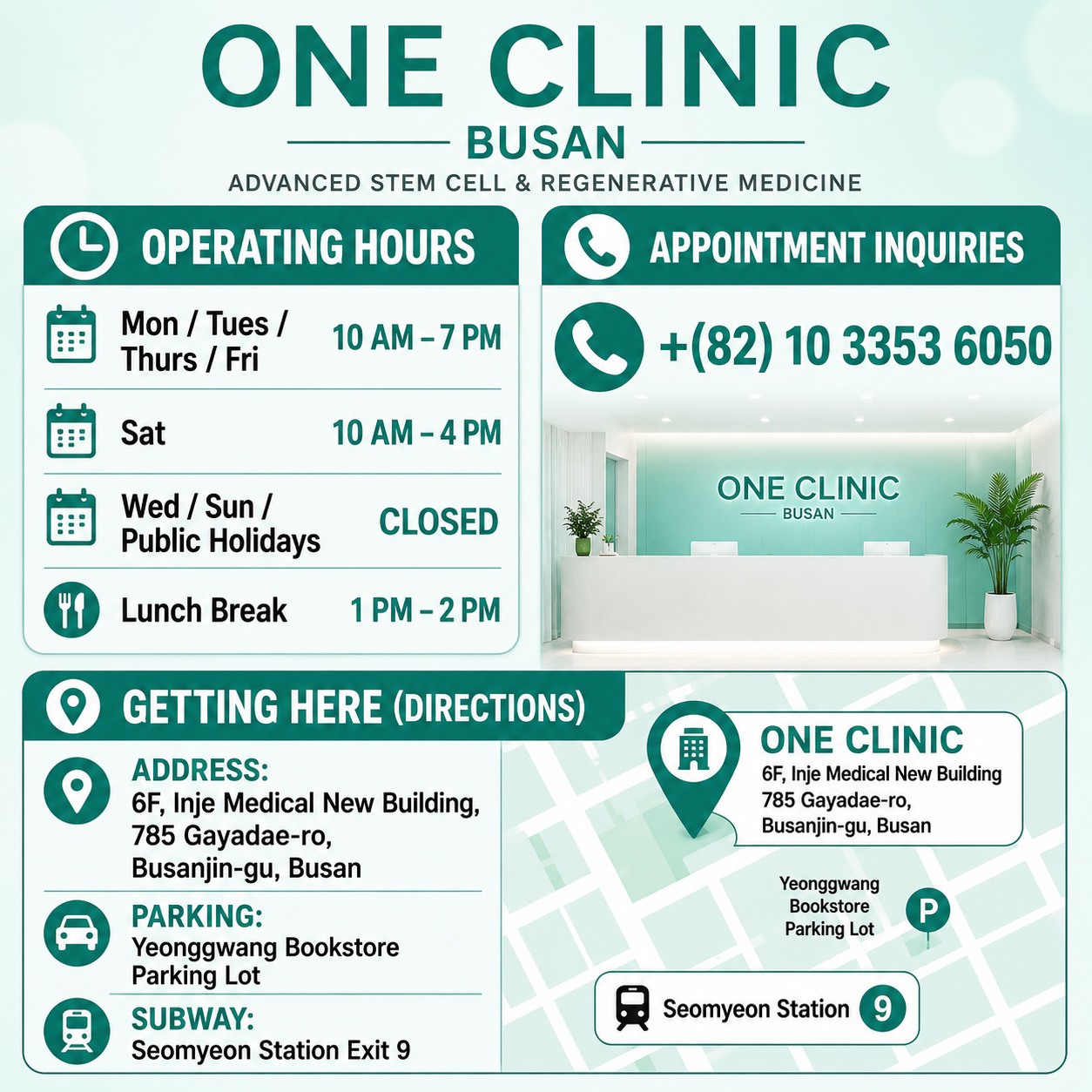
Seomyeon One Clinic
6F, Inje Medical New Building
785 Gayadae-ro, Busanjin-gu, Busan, Korea
Frequently Asked Questions
What is PRP Therapy?
PRP Therapy (Platelet-Rich Plasma Therapy) is a regenerative treatment that uses concentrated platelets prepared from your own blood to stimulate collagen production, tissue repair, and natural skin rejuvenation.
How does PRP Therapy work?
A small blood sample is processed to isolate platelet-rich plasma containing natural growth factors. The PRP is then injected into the skin to stimulate collagen production, tissue repair, and skin regeneration.
What skin concerns can PRP Therapy improve?
PRP Therapy may improve fine lines, acne scars, enlarged pores, uneven texture, dull skin, reduced elasticity, mild skin laxity, and overall skin quality.
Is PRP Therapy the same as filler?
No. PRP Therapy stimulates your body's natural healing and collagen production without adding facial volume. Dermal fillers provide immediate volume and contouring.
How many PRP treatments are recommended?
Many patients benefit from an initial series of approximately three treatment sessions performed several weeks apart, followed by maintenance treatments according to individual skin condition and goals.
When will I see results?
Some patients notice healthier skin within several weeks, while collagen production continues over several months. Results develop gradually and naturally.
Is there downtime after PRP Therapy?
Temporary redness, swelling, bruising, or mild tenderness may occur after treatment but generally improve within several days.
Is PRP Therapy painful?
Topical numbing cream is usually applied before treatment. Most patients tolerate the procedure well, experiencing only mild discomfort during injections or microneedling.
Can PRP Therapy be combined with other treatments?
Yes. PRP Therapy is commonly combined with microneedling, RF microneedling, Rejuran, Juvelook, Exosome therapy, SKINVIVE, Pico Laser, HIFU, and radiofrequency skin tightening for comprehensive skin rejuvenation.
Where can I get PRP Therapy in Busan?
PRP Therapy is available at
Seomyeon One Clinic, located at
6F, Inje Medical New Building, 785 Gayadae-ro, Busanjin-gu, Busan, Korea.